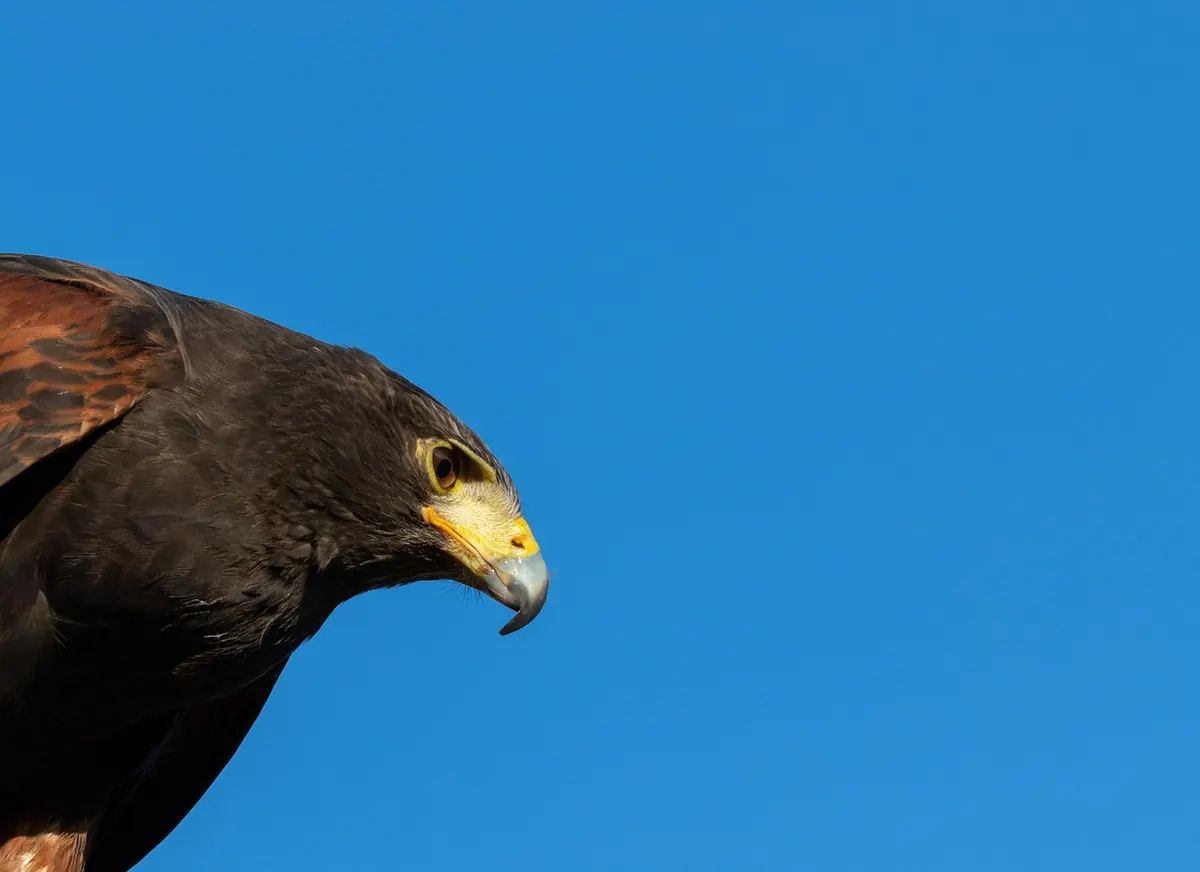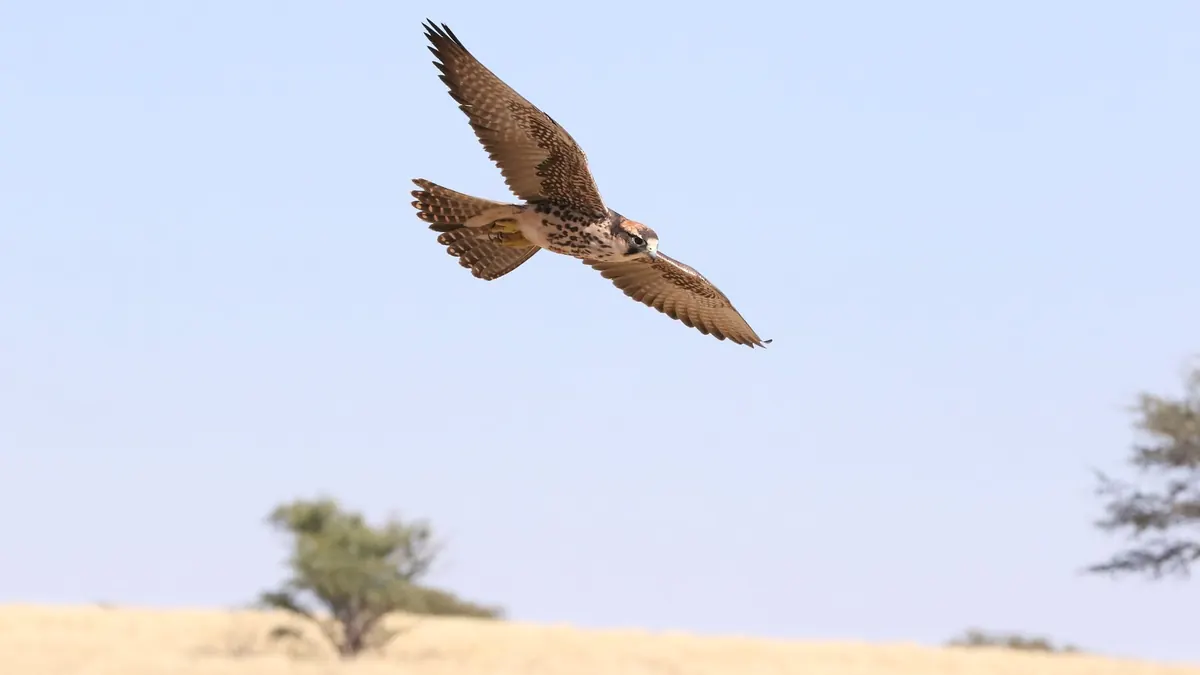
Most encounters with birds of prey last a few seconds. A shape crosses a gap in the hedge, tilts, and is gone. Trying to identify it by plumage is hopeless, because you rarely see any. The good news is that you do not need to. Raptors give themselves away by proportion and behaviour: how long the wings are, how the tail hangs, whether the bird is soaring or sprinting. Learn half a dozen of those cues and the mystery shapes start falling into place.
Silhouette first, colour last
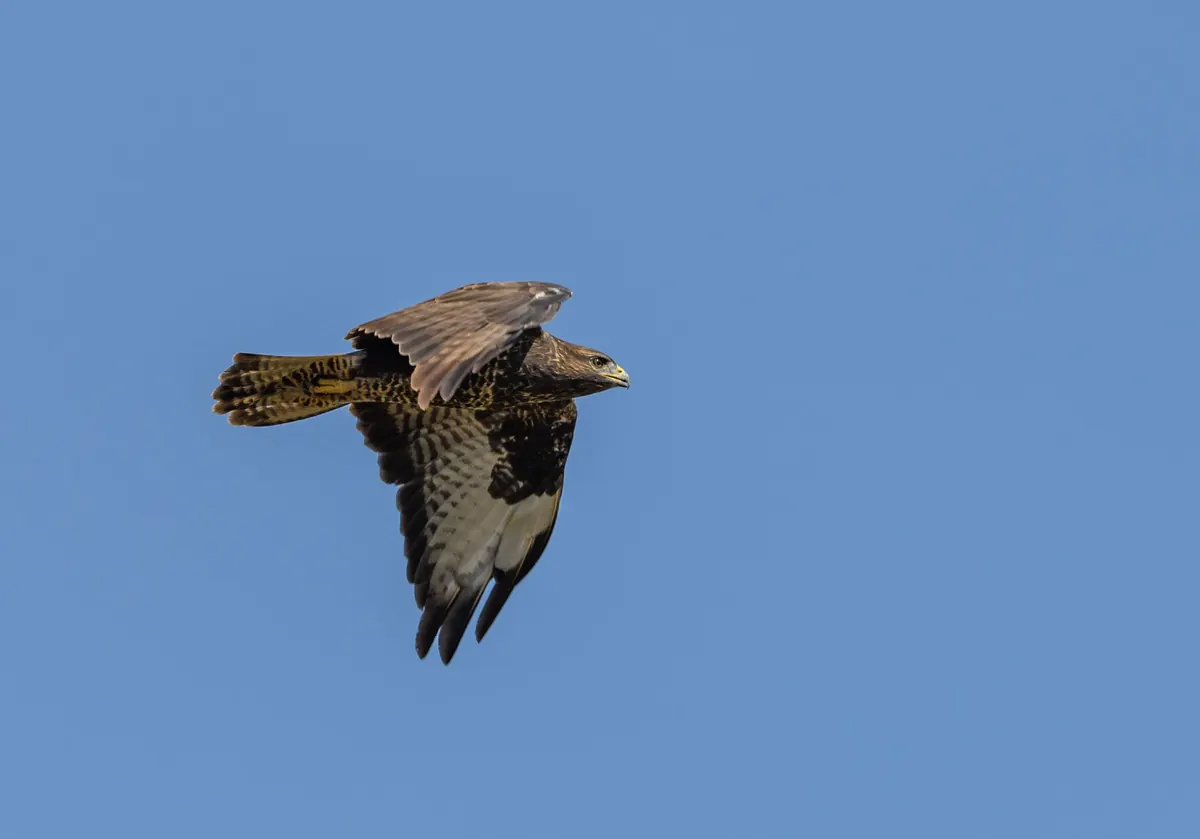
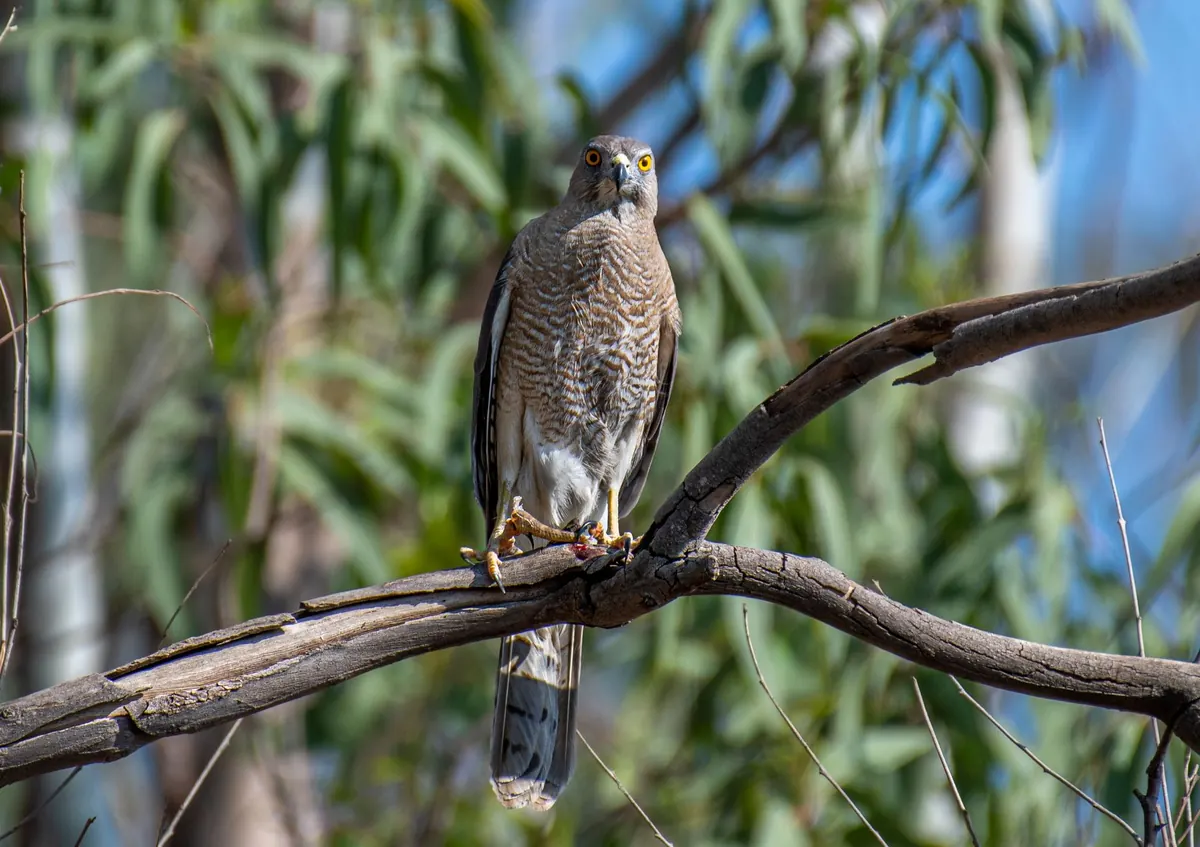
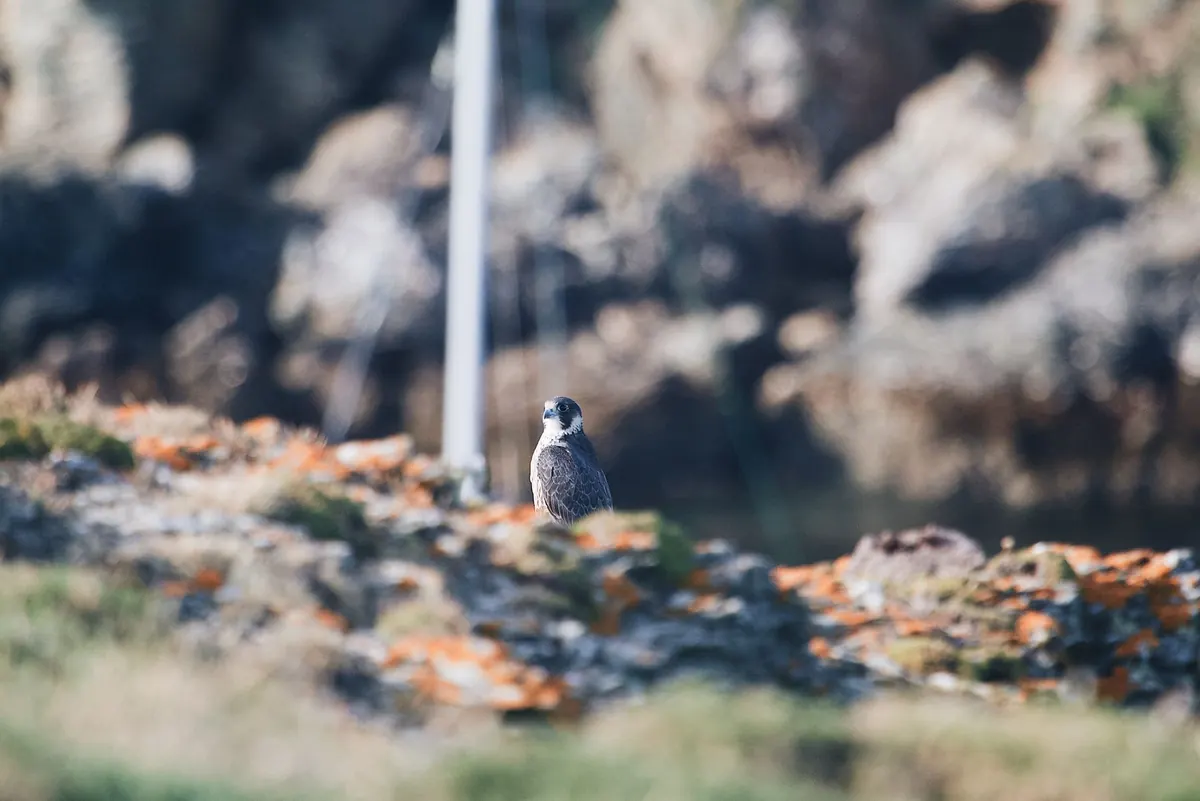
Before you reach for field marks, look at the whole bird. How much of it is wing, and how much is tail? Is it long and slender, or compact and butch? A common buzzard is broad-winged with a short, fan-shaped tail and a chunky body. A red kite is mostly wing, with a long tail that seems to steer the bird rather than follow it. A sparrowhawk is a small head on a long tail with short, rounded wings. A peregrine is all chest and shoulder, with wings that taper to a point.
Two measurements do most of the work here: the length of the wing against the length of the tail, and how far the head projects beyond the leading edge of the wing. Get the bird against the sky, use the horizon as a ruler, and say what you see out loud before your memory edits it. Birders call this the overall impression or "jizz", and it is more reliable than any single feature.
Wing shape: the hand tells the story
Look at the outer half of the wing, where the long primary feathers sit. That is the "hand", and it separates families quickly.
Broad wings with splayed, fingered tips belong to the soaring birds: buzzard, red kite, golden eagle and the harriers. Look closely at a buzzard and you can count four or five distinct fingers at the wingtip. Narrow wings with swept-back wrists and pointed tips belong to the falcons, built for speed rather than lift. In between sit the accipiters, the sparrowhawk and goshawk, whose short, rounded wings and long tails are designed for dodging through trees.
Wing angle matters too. Buzzards and harriers often hold their wings in a shallow V, known as a dihedral, which gives a buoyant, slightly unstable look. Kites bend the wrist and hang their wings loosely. A peregrine in level flight looks like a clenched fist; a hobby looks like a scythe.
Tail shape and length
The tail is the single most useful feature for beginners, because it holds its shape even at distance.
A deeply forked tail means red kite, though from head-on the fork can collapse into a narrow wedge, so watch for the constant twisting and steering. A long tail with obvious barring and a bright white rump patch means a hen harrier, usually a female or young bird, the so-called ringtail. A short, square-ended fan belongs to a buzzard. A long, square tail on a bird that flaps and glides low over a hedge is a sparrowhawk. Short, narrow and slightly kinked is the falcon signature.
Flight style: how the bird uses the air
Behaviour is often quicker to read than shape. Ask what the bird is doing with the air, not just what it looks like.
- Soaring on flat, level wings with barely a flap: buzzard, red kite, eagle, osprey in spring.
- Soaring with wings in a shallow V, rocking gently side to side, low over reeds: marsh harrier.
- Hovering with a fanned tail, head down: kestrel, the only British raptor that hovers routinely.
- Fast, direct flight with stiff, shallow wingbeats and long, level glides: peregrine.
- Bursts of flap, flap, glide, close to cover: sparrowhawk.
- Buoyant, flicking, insect-chasing flight in summer: hobby.
- Low, bounding flight over open moorland, like a large woodpecker: merlin.
Weather changes everything. On a warm, still afternoon in May almost every raptor soars, because thermals make it cheap. On a blustery day everything glides. Judge the bird against what the air is offering.
Location and timing do half the work
Habitat narrows the options before you have even raised your binoculars. Reedbeds and wet marshes mean marsh harrier. Open moorland means hen harrier and merlin. Farmland, rough pasture and motorway verges mean buzzard and kestrel, with kestrels often perched on wires and posts. Woodland edges, hedgerows and gardens mean sparrowhawk. City centres, cathedral towers and sea cliffs mean peregrine, and a peregrine over a high street is a genuinely common sight now.
Season matters as much. Hobbies arrive in late April and leave by September, so a hobby-shaped bird in December is something else. Ospreys pass through on spring and autumn migration, most often over reservoirs and estuaries. Hen harriers come down to lowland roosts in winter, which is when most people see them.
The birds that cause the most arguments
Buzzard or red kite?
Kites look looser and longer, with angled wings and a tail that never sits still. Buzzards look solid, compact and purposeful, with a short fan tail and steadier wingbeats.
Kestrel or sparrowhawk?
If it hovers, it is almost certainly a kestrel. Sparrowhawks do not hover; they dash, flapping and gliding in short bursts, and their rounded wings and long tail give them a completely different rhythm.
Peregrine or hobby?
Hobbies are slimmer and more buoyant, with wings that look curved and narrow. They often hunt insects and swallows at height in summer. Peregrines are heavier, with deeper wingbeats and an unmistakable sense of weight and purpose. If you find yourself flinching, it is probably the peregrine.
Buzzard or marsh harrier?
Harriers fly low, slowly rocking, with long wings in a V, a small head and a long tail, usually over reeds or wet grass. Buzzards soar high, on broad wings, with a short tail.
Practice deliberately, a little at a time
Speed comes from repetition, not from memorising plates. Try this routine:
- Pick one bird you can see regularly near home and learn it properly, so it becomes your baseline.
- Watch one bird for a full five minutes rather than collecting a list. How does it flap? How does it turn?
- Write three words in a notebook while the bird is still in view: shape, tail, behaviour.
- Check your identification afterwards, not during. Splitting your attention between bird and book loses the bird.
- Sketch what you saw, however badly. Drawing forces you to look at proportion rather than colour.
Visit a raptor watchpoint in spring, when displaying birds stay up for hours, and you will learn more in one afternoon than in a month of accidental sightings. Above all, accept that some birds get away unidentified. Even experienced watchers let plenty of silhouettes go. All wild birds in the UK are protected by law, and disturbance at nest sites can be an offence, so keep a respectful distance, especially between March and July, and let the birds do the flying.
Photo: Derek Keats / Pexels